How we build stamped concrete
The process starts like any quality pour: a compacted base, forms set to drain, and reinforced concrete. Integral color or a color hardener goes into the surface, then textured mats are pressed into the fresh concrete to create the pattern. A release agent adds the second tone that makes the pattern read like real stone or brick.
After curing, the surface is cleaned and sealed. The sealer brings out the color, protects against stains and UV, and is reapplied every few years to keep the finish looking new.
Patterns and finishes
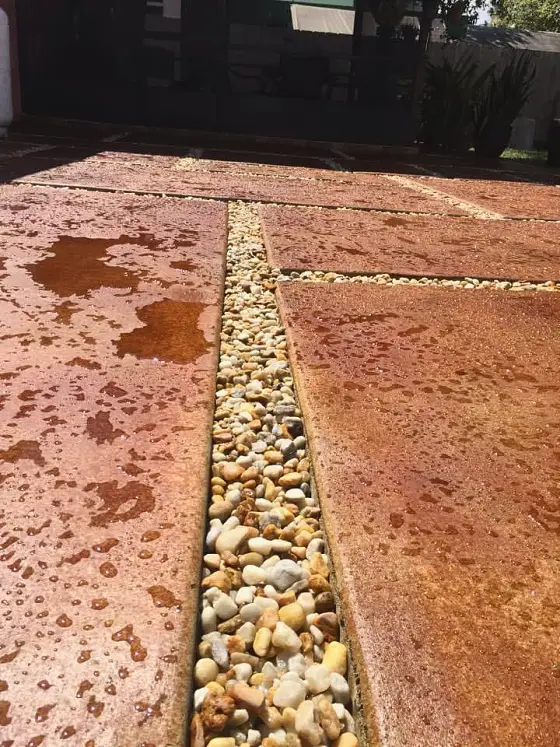
- Herringbone and running-bond brick patterns in red, charcoal or grey tones
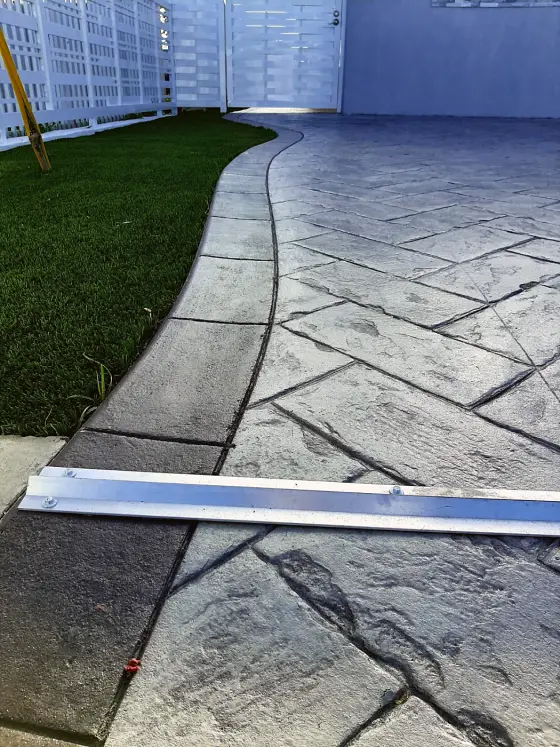
- Ashlar slate and random stone patterns with contrasting borders
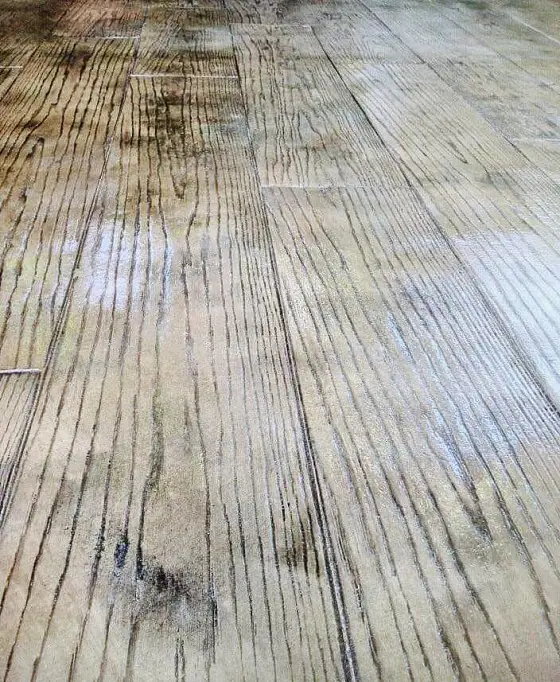
- Wood-plank stamping for patios and pool surrounds
- Colored broom-finish concrete and exposed aggregate
- Stamped borders and bands combined with plain or slab driveways
Why homeowners and businesses choose TCP Concrete
The paver look without paver problems
One continuous slab cannot shift, sink in sections or sprout weeds between joints.
Custom to your home
Pattern, base color and accent color are chosen to match the roof, walls and landscaping.
Durable in the Florida sun
Quality color hardeners and UV-resistant sealers keep the color from fading.
Our process
- Free on-site estimate. We measure, check drainage and access, and discuss finishes. You receive a written, itemized estimate.
- Permits and scheduling. We tell you whether a permit or HOA approval is needed and handle the paperwork.
- Demolition and base. Old concrete is removed, the sub-base is compacted and forms are set to drain.
- Reinforcement and pour. Steel goes in, concrete is placed, finished and jointed.
- Curing and walkthrough. We protect the new concrete while it cures and walk the finished job with you.
Frequently asked questions
Does stamped concrete crack?
All concrete can crack; the difference is control. We cut control joints into the pattern lines where possible so any movement happens where it is not visible.
Is stamped concrete slippery?
The texture of the stamp provides traction. Around pools we add a non-slip additive to the sealer.
How often does it need resealing?
Typically every 2 to 3 years in South Florida, depending on sun exposure and traffic.